

Prof Mohamed Esham, a professor at the Sabaragamuwa University of Sri Lanka was awarded the Knowledge2Action mobility grant in 2022-23. Here, he recounts his experiences, the lessons he learnts, the new connections he forged and the fresh avenues he ventured into during this mobility visit….
The K2A moblity subsidy gave me the opportunity to collaborate with the Geography of Food Research Group led by my host Isabel Jaisli and other researchers at the ZHAW School of Life Sciences and Facility Management, Zurich, Switzerland. This opportunity was a testament to the power of networking and knowledge exchange.
One of the highlights of this collaborative journey was the opportunity to network with members of the Geography of Food Research Group and other research groups at ZHAW. “This enriching experience has not only broadened my horizons but has also opened avenues for potential interdisciplinary research collaborations”, Esham said.
Empowering Minds: Lecture Series at ZHAW
An important moment in this collaborative journey was the chance to conduct a lecture on “Building Climate Resilience and Adaptive Capacity of Tea Smallholders in Sri Lanka.” The lecture, held for the Master’s program in Environment and Natural Resources, delved into sustainable farming practices as a means to tackle climate change and variability in Sri Lanka.
Sharing Insights: Research Colloquium and FiBL Visit
The journey continued with delivering a thought-provoking lecture at the Research Colloquium on Agroecology and Food Systems, titled “Why Organic Agriculture Move Failed in Sri Lanka? Lessons to Learn.” The discourse extended beyond ZHAW, with an invitation to present at the Research Institute of Organic Agriculture (FiBL) in Frick. This visit not only allowed for the sharing of insights but also facilitated discussions with experts and participation in the Department of International Cooperation’s board meeting.
Seeds of Collaboration: FiBL Research Project
“I initiated a research collaboration with FiBL. We aim to explore opportunities and challenges in developing organic agriculture in Sri Lanka, contributing to the global discourse on sustainable farming practices”, Esham said.
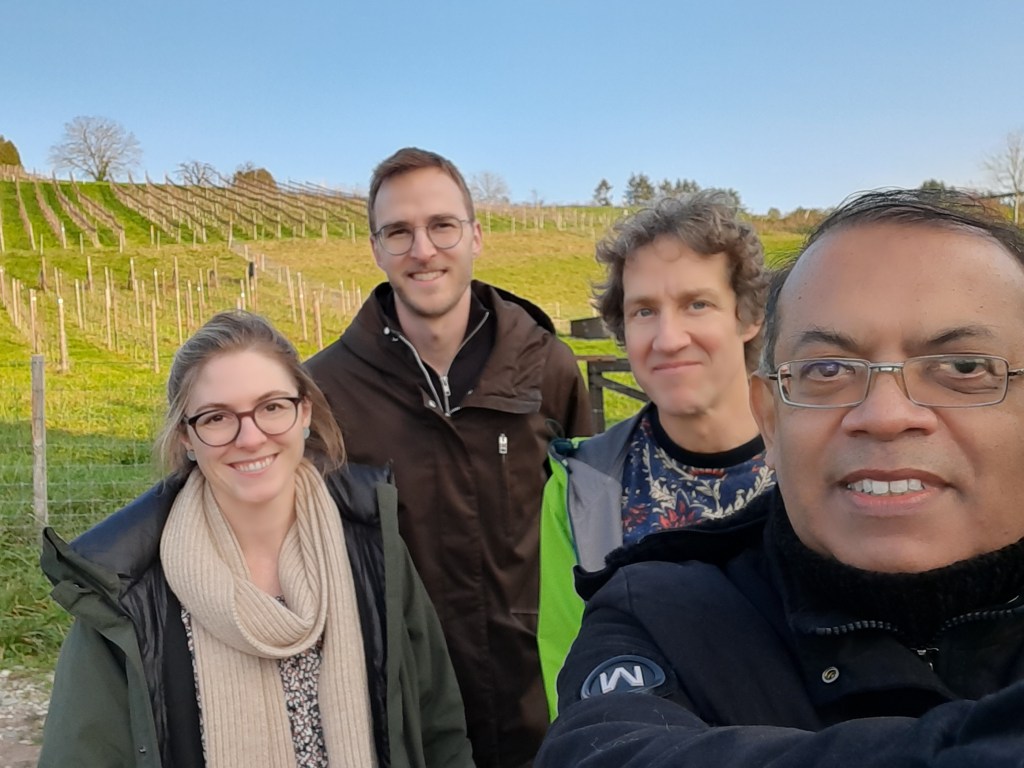
Granting Happiness: Assessing Smallholder Farmers’ Well-being
A collaborative effort with the Geography of Food Research Group resulted in the development of a grant proposal. Titled “Assessing Smallholder Coffee and Tea Farmers’ Happiness in Sri Lanka & India,” this proposal has been submitted to the Leading House South Asia and Iran. If successful, it promises to shed light on the emotional well-being of farmers, a crucial yet often overlooked aspect of sustainable agriculture.
Bridging Borders: Black Pepper Value Chain Collaboration
My involvement extended beyond research projects. I had the privilege of aiding a ZHAW researcher in establishing a collaboration with a Sri Lankan expert on black pepper value chain development. This cross-cultural exchange aims to enhance knowledge and practices in the spice industry.
Future Horizons: Collaborative Prospects with Sabaragamuwa University
As the journey unfolded, discussions were initiated regarding future collaborative possibilities between ZHAW School of Life Sciences and Facility Management and Sabaragamuwa University of Sri Lanka. This lays the groundwork for fostering global partnerships and expanding the scope of research initiatives.

In conclusion, this collaborative initiative has not only broadened my research horizons of sustainable agriculture but has also demonstrated the potential for positive change in the field of sustainable agriculture. As we look ahead, these collaborations stand as pillars of progress, driving us towards a future where agricultural practices are not only sustainable but also contribute to the well-being of those who cultivate the land. The journey continues, and the possibilities are as vast as the fields we seek to nurture.
 Knowledge2Action
Leave a comment