

By Malith De Silva
Arrival and First Impressions
On the 25th of February 2025, I landed in Zurich, Switzerland, from Colombo, Sri Lanka, for a month-long academic visit under the K2A Mobility Subsidy. I had long admired Swiss research culture from
afar, but nothing quite prepared me for the brisk alpine air, the near-perfect timing of the trains, or the breathtaking journey into Lausanne. As the snowy countryside blurred past my window, I transitioned mentally from the chaos of the familiar to the quiet pulse of a city wrapped in order and cold clarity.
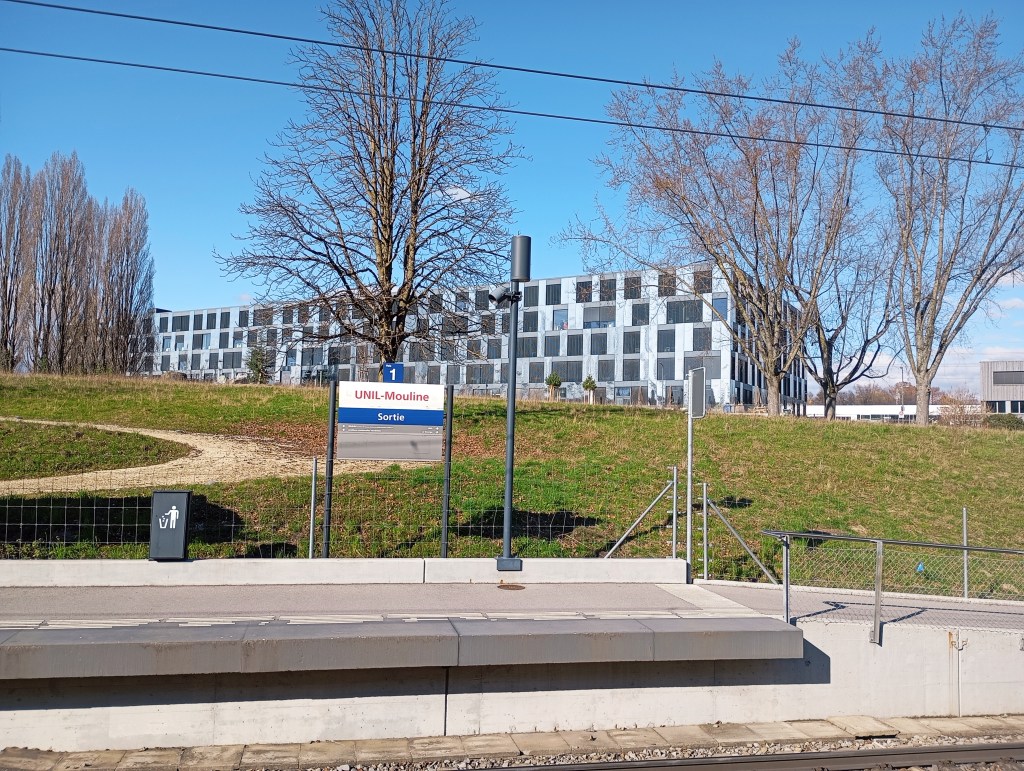
Settling in Lonay, a peaceful suburb west of Lausanne, I began my daily commutes to the University of Lausanne (UNIL), housed in the Géopolis building, which quickly became a second home. The cold was intense, but the warmth of the academic community and my existing connection with Prof. René Véron created a space that was as intellectually stimulating as it was personally grounding.

A Window into My Work
This visit was rooted in an ongoing collaboration with Prof. René Véron, first through the R4D project and later through the SPIRIT project, both of which focused on municipal solid waste management in Sri Lanka, Nepal, and India. My proposal for the K2A mobility was to co-develop a working paper on the multifaceted roles of formal waste workers in Sri Lanka, particularly in two municipal councils we have studied since 2018.
From day one, I noticed a shift in supervisory dynamics. With René, guidance came with respect and space; I wasn’t being spoon-fed but rather invited into a peer-like relationship where my own academic instincts were trusted. I immersed myself in anthropological literature particularly the anthropology of the state and what began with one reading list soon evolved into a cascade of papers and reflections. I read ten academic papers and an entire book over the course of a month.
My days settled into a simple, enriching rhythm: morning walks to the Géopolis building, writing sessions, mid-day chats over coffee, late afternoons filled with reading, and evenings spent reflecting on the day’s intellectual provocations. These rhythms allowed me to reimagine municipal waste management in Sri Lanka not as a bureaucratic function, but as an embodied negotiation of power and belonging especially in the lives of waste workers.
My work on the paper culminated in a presentation titled “Bridging Citizens and State: The Mediatory Role of Waste Workers in Shaping State Imaginations in Urban Sri Lanka” at the Bouillon d’idées, where I received thoughtful, constructive feedback from colleagues at Géopolis. That moment standing before an audience of international academics was both humbling and empowering.
I also delivered two other academic presentations:
> “Dynamic roles and practices of municipal waste collectors of Colombo, Sri Lanka from the lens of everyday life activities and micro politics” for master’s students at the Institute of Geography and Sustainability, University of Lausanne.
> “More than What You See!!: An Intersectional Analysis of Formal Waste Workers’ Practices” for the Master of Arts in Environmental Social Work at the University of Applied Sciences and Arts Western Switzerland (HES-SO).
Each session was an opportunity to share grounded empirical work from Sri Lanka with a diverse international audience, and the feedback I received helped deepen my theoretical framing.
A particularly enriching part of this journey was the opportunity to work with Dr. Swetha Rao Dhananka from the School of Social Work, Fribourg (HETS-FR). Beyond inviting me to deliver a guest lecture for the Master of Arts in Environmental Social Work programme at HES-SO, she generously offered one-on-one guidance on research design and methodology an exchange that deeply influenced the direction of my ongoing work. Our conversations were as stimulating as they were warm, and I was also fortunate to share a lovely evening over dinner with Swetha, Pavan, Roshan, and Tejal, where academic exchange melted into laughter, storytelling, and shared food.
In Conversations and Corridors
Beyond formal collaboration, the true heartbeat of this mobility lay in its informal moments in the cafeteria, along hallways, during impromptu strolls by Lac Léman. I was warmly welcomed into René’s close-knit group of PhD and postdoctoral scholars, many of whom were exploring intersections of Anthropology, waste, and political ecology. Our conversations often began over coffee but extended far beyond into theoretical questions, personal curiosities, and laughter.
One standout figure was Dr. Aparna Agarwal, a postdoc whose work on caste and waste landscapes in India opened up new frames of understanding for me. Our friendship deepened through shared walks,
lakeside musings, and wide-ranging conversations from academic theory to navigating life as South Asian scholars in different parts of the world. Her encouragement even led to a collaborative outcome: proposition to publish one of our illustrated books More Than What You See! in India. Thank you, Aparna, for hosting a heartfelt farewell dinner, complete with your wonderful palak paneer, a dish that carried not just flavor but deep care and friendship.
A kindred spirit during my stay was Md Faisal Imran from Bangladesh, a fellow K2A scholar visiting UNIL. We quickly bonded over shared research interests in displacement and relocation. Our conversations sparked the development of a new research proposal focused on the lives of women in the Sundarbans, explored through traditional stitching and sewing practices. That proposal has since been submitted for the K2A Small Grant, an unexpected and exciting continuation of this brief encounter.
And then there were the many coffee chats and dinners with Su Su Myat (thank you for the wonderful pineapple pie!), Emilie Crémin, Juliette Mertenat and Surjo friends whose kindness turned a foreign city
into a familiar place. Emilie, in particular, was instrumental in helping me navigate accommodation logistics and settle into life in Lonay. These friendships, woven through daily exchanges, remain one of the most cherished outcomes of my time at UNIL.
Slow Saturdays and Swiss Trains
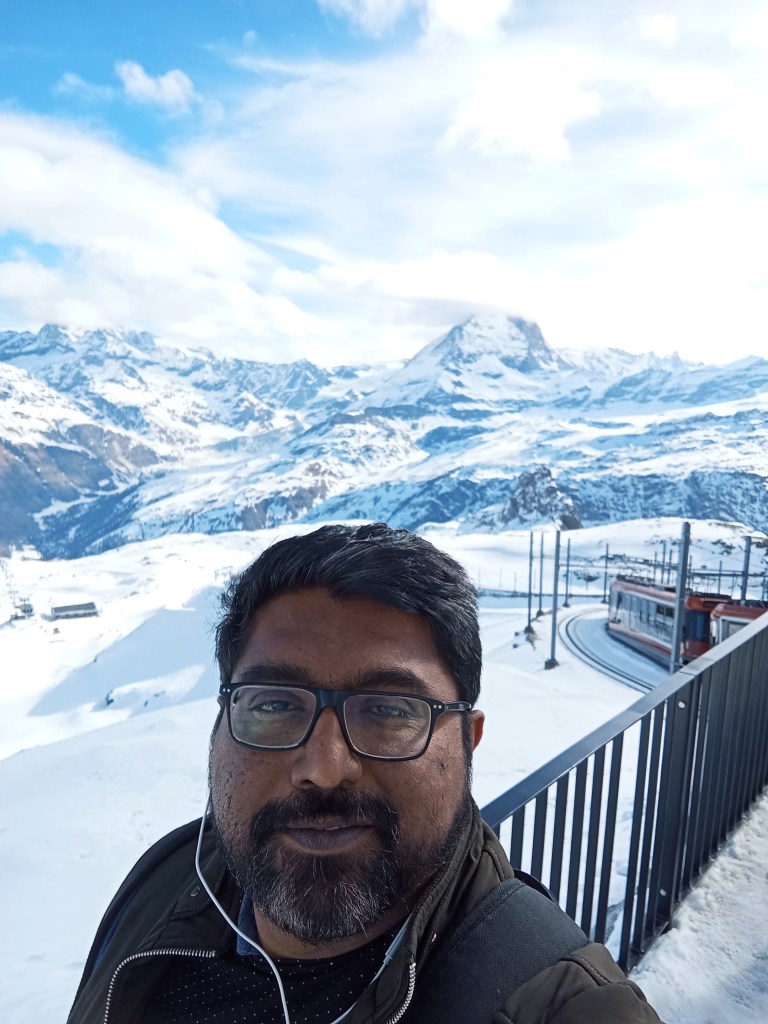
While weekdays were saturated with research and discussion, weekends offered a different kind of exploration. I embraced the unhurried rhythm of Swiss Saturdays taking trains to Bern’s old town, wandering through the Olympic Museum in Lausanne, sampling chocolates at the Cailler factory in Broc, and marveling at the majesty of the Matterhorn from Gornergrat. The Swiss rail system, efficient and serene, became a second classroom. I even managed to finish two Sri Lankan novels The Professional and Serendipity by Ashok Ferrey during my long train rides.

Back in Lonay, life at my Airbnb added another layer to the experience. Sharing a home with housemates from Syria, Tunisia, France, Sweden, Switzerland, and the UK taught me as much about waste segregation as it did about cross-cultural living. Despite my mediocre French, we bonded over shared chores, broken languages, and meals that spoke their own dialects. Participating in Switzerland’s strict waste-sorting routines gave me new insight into how everyday practices can align with state policy especially through platforms like Airbnb.
It was also my first time living abroad alone for such a stretch. That solitude coupled with rich intercultural interactions nudged me gently into growth. Amid the quiet order of Lausanne, I found space to think, read, and write deeply in ways I hadn’t in months.
What I Carried Home
This month did more than refine a working paper; it shifted my entire intellectual axis. The exposure to anthropological frameworks especially through readings and dialogues on the Anthropology of the state allowed me to reimagine the role of waste workers beyond technocratic categorizations. I now see them as active participants in shaping the everyday imagination of the state particularly formal waste workers who navigate not only bins and routes, but also complex social hierarchies and civic expectations.
This perspective is something I will carry into my broader research work and future projects. The collegiality I experienced at UNIL, the informality of intellectual exchange, the feedback I received during seminars, and the classroom interactions with Swiss students all left lasting impressions. I also
gained confidence in presenting Sri Lankan field realities to international audiences, using innovative mediums like illustrated books to bridge cultural and academic distances.
On a personal level, I made friendships that feel durable. Whether through co-authoring a proposal, walking by Lac Léman, or simply debating the virtues of Swiss chocolate, these connections have already begun to yield new projects and partnerships.
Living in Lausanne also taught me something subtler: the value of academic spaces that allow for meandering thought, slow thinking, and unstructured conversations. That freedom to explore intellectually, emotionally, and even geographically was a gift. I returned home not just with a draft of a paper, but with renewed clarity about my research trajectory and a deeper appreciation for what mobility can truly offer: transformation.
Gratitude and Continuity
I remain deeply grateful to the K2A Network for enabling this journey not just as a researcher, but as a learner, a collaborator, and a friend. To Prof. René Véron, thank you for hosting me with trust, respect, and patience. To the University of Lausanne and especially Carol, thank you for your warm facilitation and support. To my new colleagues, thank you for expanding my intellectual and emotional horizons.
Though my time in Lausanne has ended, the momentum it gave me continues. I return to my ongoing work with new collaborations in motion, a working paper in progress, and stories still unfolding.
 Knowledge2Action
Leave a comment