

By Shazia Jabeen
Dr. Shazia Jabeen, (Assistant Professor, Department of Environmental Sciences, Women University Multan, Pakistan) was awarded the Knowledge2Action mobility subsidy 2023-24, funded by the Cluster of Cooperation (CLOC). She was hosted by Prof. Dr. Adrien Mestrot at Institute of Geography, Department of Soil Science, University of Bern, Switzerland. The mobility exchange was aimed at engaging in activities that enhance bilateral collaboration between Europe and South Asian scientists. The chosen field of study revolve around rice crop, which is an important
agricultural crop of South Asia and have notable share in European market, particularly in South Asian immigrants populated areas. Rice has the ability to accumulate arsenic, amassing concentrations ten times higher than other cereals such as wheat. In particular, rice grown under flooded conditions favors greater soil arsenic solubility and uptake into the plant. Thus, awareness of the human health risk posed by arsenic-contaminated rice consumption has become a more widely recognized threat to food safety.
There is quite an extensive body of research on arsenic in rice in general but only very little is known about Pakistani rice. This is due to the fact that the arsenic pollution in the groundwater was only discovered recently in Pakistan, where an estimated 60 million people are at risk from drinking arsenic tainted water. This water is being used for irrigation in rice paddies, leading to an as yet mischaracterized risk to population. Arsenic exists in different chemical forms (also called species) and these species have different toxicities. International legislation for arsenic in rice is actually based on inorganic arsenic concentrations. To differentiate between arsenic species and thus comply with regulation or make a proper risk assessment one must rely on advanced extraction and analytical methods, namely High-Performance Liquid Chromatography coupled to Inductively Coupled Plasma Mass Spectrometry or HPLC-ICP-MS, a method that Prof. Dr.
Mestrot has been using for the past 18 years.
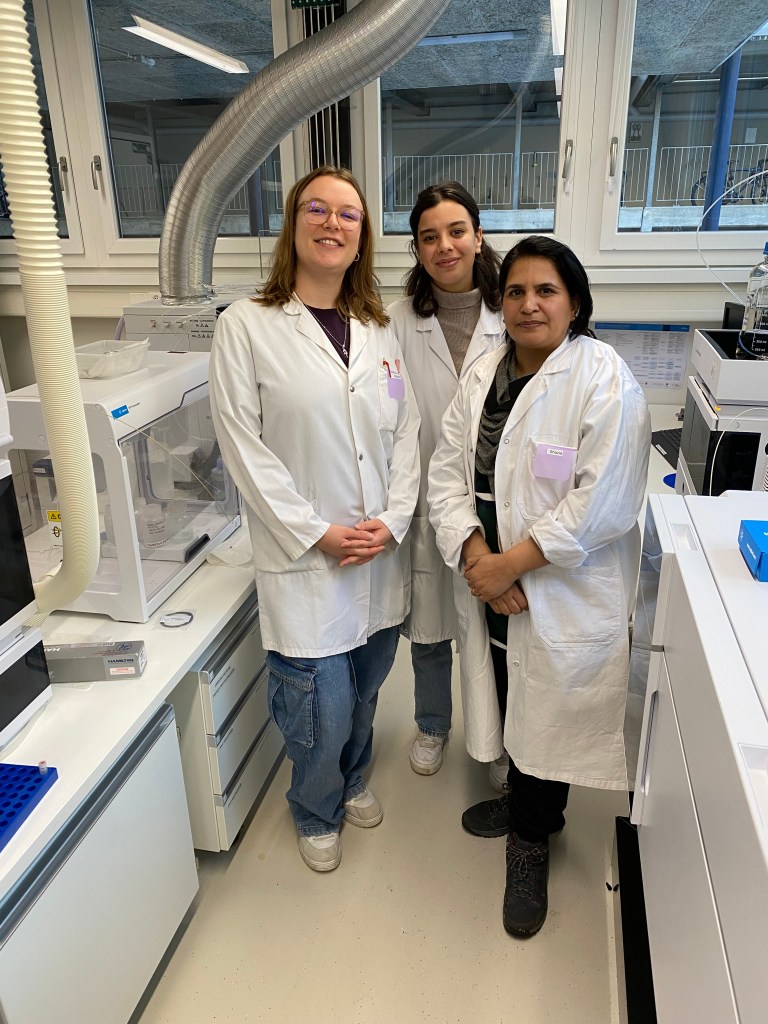
During her short stay, Dr Jabeen focused on being trained on such methods in order to quantify the concentrations of arsenic in different varieties of rice which are cultivated in the Punjab region of Pakistan (famous for Banaspatti rice). She received full support from the team. Prof. Adrien Mestrot warmly welcomed her and introduced her to his research group while Dr Ikram Bakour, a postdoctoral fellow in research group trained her in processing of samples and use of different equipment and instruments, especially ICP-MS and HPLC ICP-MS. This mobility grant allowed Dr. Jabeen to better understand the occurrence of arsenic species in Pakistan rice and its relationship with the quality of soil and irrigation water and to get hands-on training on state-of the-art analytical methods.
Another great opportunity was to attend a weekly soil science colloquium. In these seminars not only did departmental research students present their work, but so did foreign research faculty. These interactive seminars helped Dr. Jabeen to understand the different research projects on arsenic, mercury, and antimony pollution going on in the Soil Science Group at the Institute of Geography and identify future opportunities to collaborate.
 Knowledge2Action
Leave a comment