

By Md Faisal Imran
On March 4, 2025, I arrived in Zurich, Switzerland, and subsequently traveled to Lausanne—a city renowned for its picturesque mountains, Lake Lausanne, expansive vineyards, and striking landscapes. During this academic mobility, I was affiliated with the University of Lausanne, working under the supervision of Professor René Véron at the Department of Geography, Geopolis. My official academic engagement commenced on March 5, 2025.
The most interesting aspect of this visit is that, following the confirmation of this mobility grant, the teams from University of Liberal Arts Bangladesh (ULAB), Bangladesh, the University of Lausanne (UNIL), Switzerland, IIT Kharagpur, India, and the two NGO partners (SAJIDA Foundation and SJSM) from our region collaboratively designed a two-week visit to Switzerland. This opportunity has provided me with additional momentum to engage closely with colleagues and foster deeper collaboration in trans-boundary research.

Visit at the Graduate Institute, Geneva (IHEID)
On March 7, 2025, I traveled to Geneva, Switzerland, to meet with Dr. Christophe Gironde, Senior Lecturer in Development Studies, and Mrs. Lucile Mougea at the Graduate Institute, Geneva. This meeting served as a preparatory engagement for the upcoming workshop titled “Scaling Up Co-developed Experimentations and Solutions for Sustainability” held at Geopolis, University of Lausanne. The workshop aims to foster interdisciplinary exchange among researchers and practitioners from India, Bangladesh, and Switzerland who collaborate with local communities in the co-development of sustainable solutions to strengthen social resilience.
During the meeting, we engaged in in-depth discussions on the knowledge and insights derived from grassroots-level interventions. We also critically reflected on the opportunities and challenges of scaling up Solution-oriented Research for Development (SOR4D) initiatives, taking into account the diverse social, political, and economic contexts, as well as the constraints experienced in our real-world laboratories situated in India, Bangladesh, Burkina Faso, and Bolivia.
Visit at the IUCN headquarters
On March 11, 2024, I visited the headquarters of the International Union for Conservation of Nature (IUCN) in Gland, Switzerland, for a meeting with Ms. Flore Lafaye de Micheaux, Head of UNEP Consultation. Alongside Dr. Emilie Cremin, Coordinator, SOR4D project, UNIL, I was hosted by IUCN officials to engage in an in-depth discussion on the conceptual framework of Nature-based Solutions (NbS). NbS are increasingly recognized as strategic interventions that address societal challenges through the protection, sustainable management, and restoration of natural and modified ecosystems—yielding benefits for both people and nature.
However, the conceptualization and operationalization of NbS remain complex and highly context-dependent, which continues to be a focal point of ongoing research. This visit provided a valuable opportunity to deepen my understanding of the evolving NbS framework and to refine my approach to integrating it more intentionally within my research and practice.


Public Lecture at the UNIL
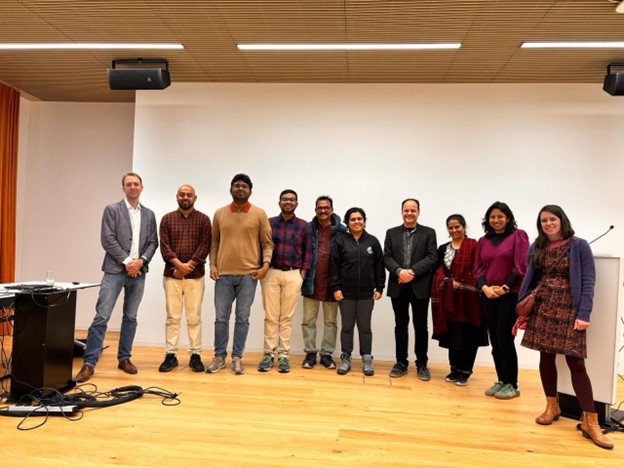
On March 17, 2025, at Geopolis, University of Lausanne (UNIL), two research teams from the SOR4D programme—ENGAGE and SCALAGRO—presented their ongoing work, highlighting pathways from grassroots engagement to the scaling up of interventions. The session focused on the optimization and mutual exchange of context-specific knowledge, enabling both teams to reflect on their respective approaches and support one another in strengthening impact.
The presentation was followed by an open feedback session involving researchers and students from UNIL, which fostered rich dialogue on the future of sustainable agriculture. This exchange provided an important platform to critically assess the scalability of co-developed solutions and to explore innovative strategies for agroecological transformation.

Seminar at Swiss Agency for Development and Cooperation (SDC)
On March 18, 2025, the Center for Sustainable Development (CSD) at ULAB participated in the seminar ‘Resilience in the Sundarbans’, organized by the Swiss Agency for Development and Cooperation (SDC) and the Swiss National Science Foundation (SNSF) under the SOR4D programme. The event opened with a striking reflection—’How long can free birds live in a cage?’—capturing the challenges faced by delta communities in transition.
The project presented aims to strengthen social resilience through community-led collective farming in the climate-vulnerable zones of the Ganges–Brahmaputra delta. It critically explores how small-scale farmers in Bangladesh and India navigate complex ‘riskscapes’ shaped by environmental hazards and socio-political dynamics. Using real-world laboratories, the project translates research into practice by promoting agroecological transitions and value addition within a Nature-based Solutions (NbS) framework. Central to this work is the revival of community-managed commons to foster collective action and long-term resilience.
Seminar at the UNIL
The inhabitants of the tidally active lower deltaic plains of the Ganges–Brahmaputra–Meghna basin face acute exposure to the cascading impacts of climate change, including sea level rise, cyclones, salinization, and coastal erosion. These environmental pressures are further exacerbated by socio-economic vulnerabilities and governance challenges.
On March 19, 2025, I participated in a seminar at the University of Lausanne (UNIL) presented the transdisciplinary research project Social Resilience in the Sundarbans, supported by the Swiss Agency for Development and Cooperation (SDC) and the Swiss National Science Foundation (SNSF) through the SOR4D programme. The seminar provided an important platform for reflecting on community co-developed solutions in the delta and facilitated dialogue between researchers and the public on the project’s findings and methodologies.
The event was attended by faculty members from UNIL, representatives from IUCN, the Graduate Institute Geneva (IHEID), the University of Bern, and students from UNIL. Presentations were delivered by Dr. Jenia Mukherjee, Souradip Pathak, and Dr. Anuradha Choudry (IIT Kharagpur); Dr. Samiya Selim and Md. Faisal Imran (ULAB); Tapas Mondal (SJSM); Md. Nurul Islam (SAJIDA Foundation); Dr. Emilie Crémin and Dr. René Véron (UNIL). The session was discussed and moderated by Dr. Shaila Seshia Galvin, Associate Professor at IHEID, Geneva.
Visit to an Organic Farm in France
On March 8, 2024, I visited Le Pâtéger des Fourches, a locally renowned organic farm located in Chemin des Terreaux, France. The farm is well known in the surrounding community for producing and supplying fresh vegetables and fruits using sustainable agricultural practices. What makes this initiative particularly notable is its innovative supply chain model, supported by the local council, which enables customers from nearby cities to pre-order produce and collect it every Monday. During the visit, I explored their marketing strategies, the nature of their strong customer relationships, and the role of local governance in facilitating this community-based food system.
On Mont Blanc
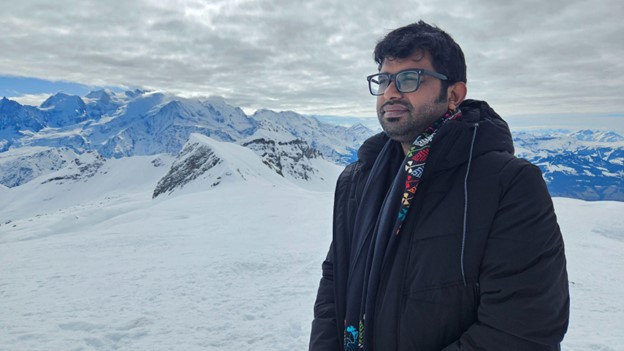
On March 8, 2024, I had the rare opportunity to ascend Mont Blanc—the highest peak in the Alps, Western Europe, and the European Union, and the second-highest in continental Europe. This experience was particularly fortunate, as March typically brings harsh and unpredictable weather conditions to the region. However, the weather on this occasion was unusually calm and serene. In conversations with local residents at Flaine Forum, near Mont Blanc, many remarked that this year had been notably different, with signs of an early summer—a potential indication of shifting seasonal patterns likely influenced by broader climate change trends.
Attended a writing workshop at a Chalet in Gryon
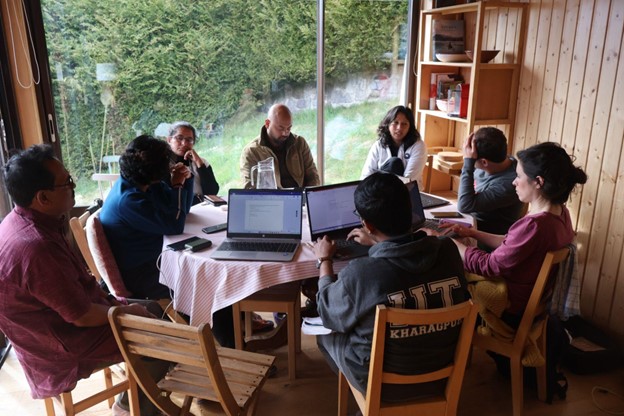
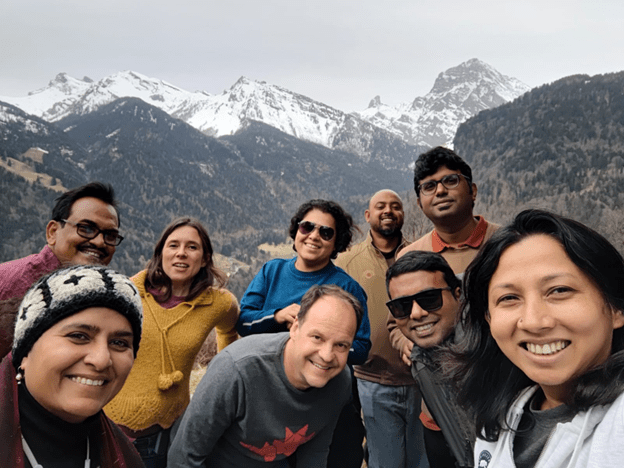
From March 20 to 23, 2025, the ENGAGE team—comprising members from Bangladesh, Switzerland, and India—convened for an intensive writing workshop at a chalet in Gryon, Switzerland. Over the course of four days, we engaged in collaborative writing and critical reflection, with a particular focus on advancing our pending research paper on the concept of ‘riskscapes’ in the coastal Sundarbans of both India and Bangladesh. In addition to manuscript development, the team also reviewed the progress of the ongoing project and strategized future pathways for scaling interventions aimed at enhancing the resilience and well-being of coastal communities in the region.
 Knowledge2Action
Leave a comment